März / April 2025
Technische Universität München
A House for Plants and People
About Time Urban Foodhall
Technische Universität München
Bachelor
17.07.2024
Professorship of Architecture and Construction, Prof. Jeannette Kuo
Landschaftsarchitektur
Vectorworks, Rhino, Adobe Suite, Vray
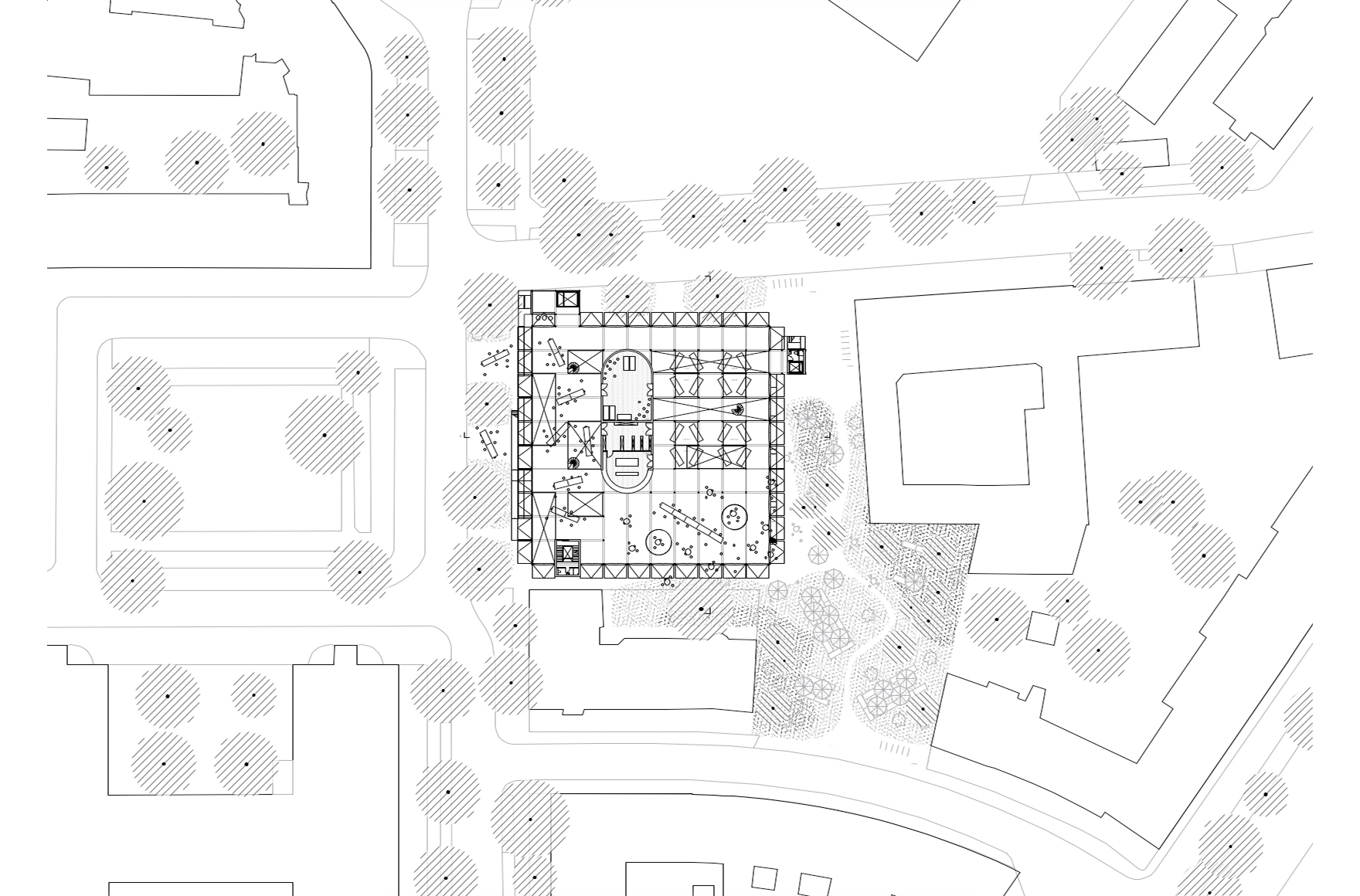
In an age where food often arrives wrapped in plastic from far flung places, its origins are easily forgotten. Yet, agriculture was once an integral part of urban life in Munich. The increasing industrialization of food production has disrupted this connection, leading to environmental harm and a growing detachment from the food we eat. Our project aims to change this by bringing food production back into the city, reconnecting peoples consummation habits to seasonal rhythms. Located next to the site of the historic Großmarkt – a key supplier for Munich´s restaurants and hotels – our vision seeks to transform this site into a hyper-regional hub for local food production, processing and comsumption. Over time, urban and agricultural life have become increasingly separate. Industrial food systems transport produce across the globe, resulting in a high carbon footprint from long-distance transportation, a loss of seasonality with food available year-round at an environmental cost, and a detachment from nature as food is seen as a supermarket product rather than something grown in soil. What if we could reverse this trend? What if food production became a visible, interactive part of city life again? Our design blends the efficiency of vertical farming with the natural cycles of traditional horizontal farming. A walkable low-tech farming facility actively extends the urban landscape, optimizes sunlight exposure, and integrates food production into daily urban activities. Alongside food cultivation, the structure offers adaptable spaces for companies, community activities, sports, and cultural events with the idea of creating an interdependent multi-use space ensuring year-round engagement. It prioritizes ecological farming that follows seasonal cycles without artificial intervention, the flexible spaces that allow for different public uses throughout the year, are equally controlled by planting and harvesting rhythms. The "House for Plants and People" is not just about food production – it is a model for future urban living. It fosters a direct connection between people, food, and nature, transforming how we interact with our environment. By redefining the relationship between agriculture and urban space, we create a sustainable and resilient typology that can respond to the cities ever changing needs.
Text von Justus Michael Förster und Balthasar Lorin Unger.